






Map the shift and the break separately
Write down the shift start and end, the planned fruit break and the participating count for that break. The full shift headcount may include people at different sites or on staggered rotations. Count the group that will actually receive the order at the named location. If several shifts overlap, identify which one owns the allocation so the same servings are not distributed twice.
Explain whether fruit is intended for immediate service after arrival or a later break. That distinction affects the product format and handling plan. A delivery window that looks convenient for the supplier may not fit the workplace's receiving capability. Bring the shift lead and facilities contact into the discussion before agreeing a schedule. Their knowledge of after-hours access can prevent a simple fruit order from becoming a gate or security problem.
Confirm whether after-hours delivery is feasible
Provide the full address, building name, pin code, entry point and any restrictions on delivery vehicles or personnel. Ask FPS to review the requested timing and route feasibility. Do not announce a nightly subscription to employees before that arrangement has been confirmed. Some workplaces may need a different handover window or serving format than initially imagined.
If security requires an approved delivery list, coordinate it through the organisation's normal process. Identify a workplace receiver and backup who can be contacted during the relevant period. Avoid posting personal staff numbers publicly or putting unnecessary access details into a general enquiry. Share only what is needed through the agreed channel. The final service confirmation should state where the supplier handover ends and what the office is responsible for moving internally.
Compare whole fruit and prepared portions
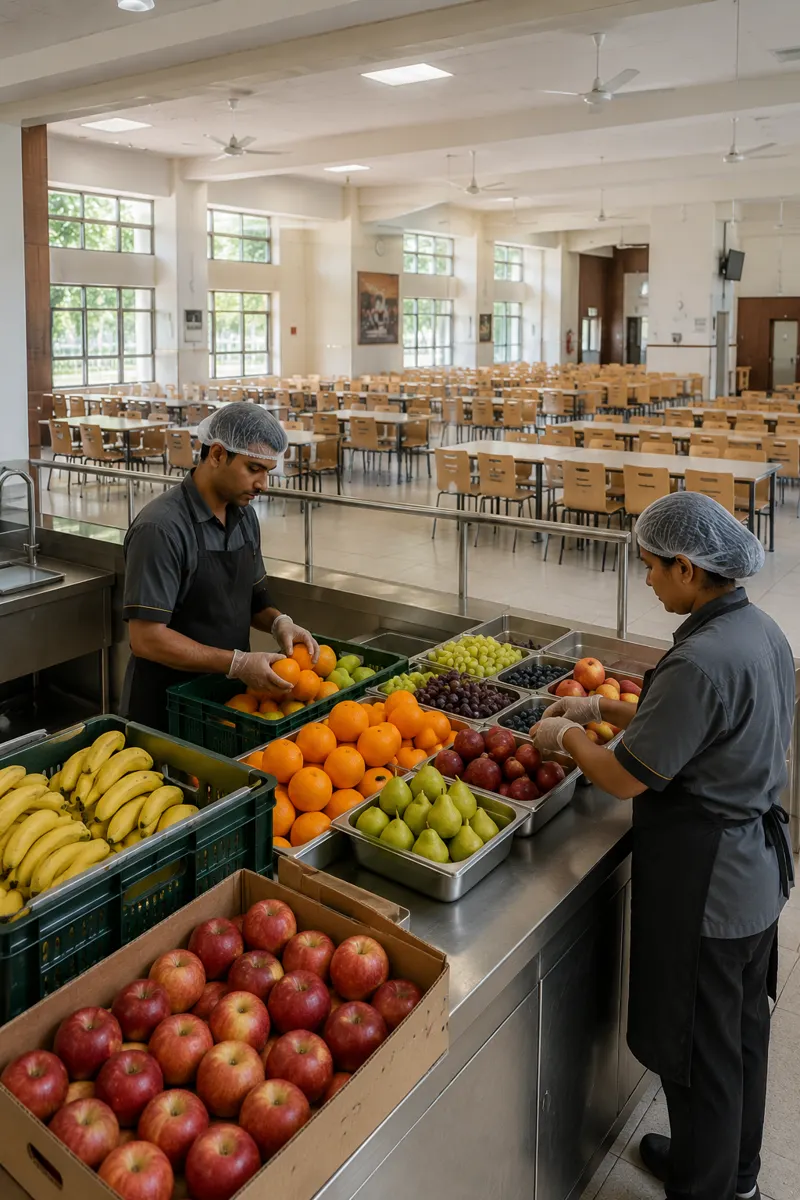
Whole-fruit allocations can be convenient for teams with staggered breaks and limited preparation equipment, depending on the fruits selected and their handling needs. Apples, bananas and peelable citrus are examples to discuss rather than an automatic night-shift menu. Confirm size, ripeness, washing expectations and distribution so employees know what they receive.
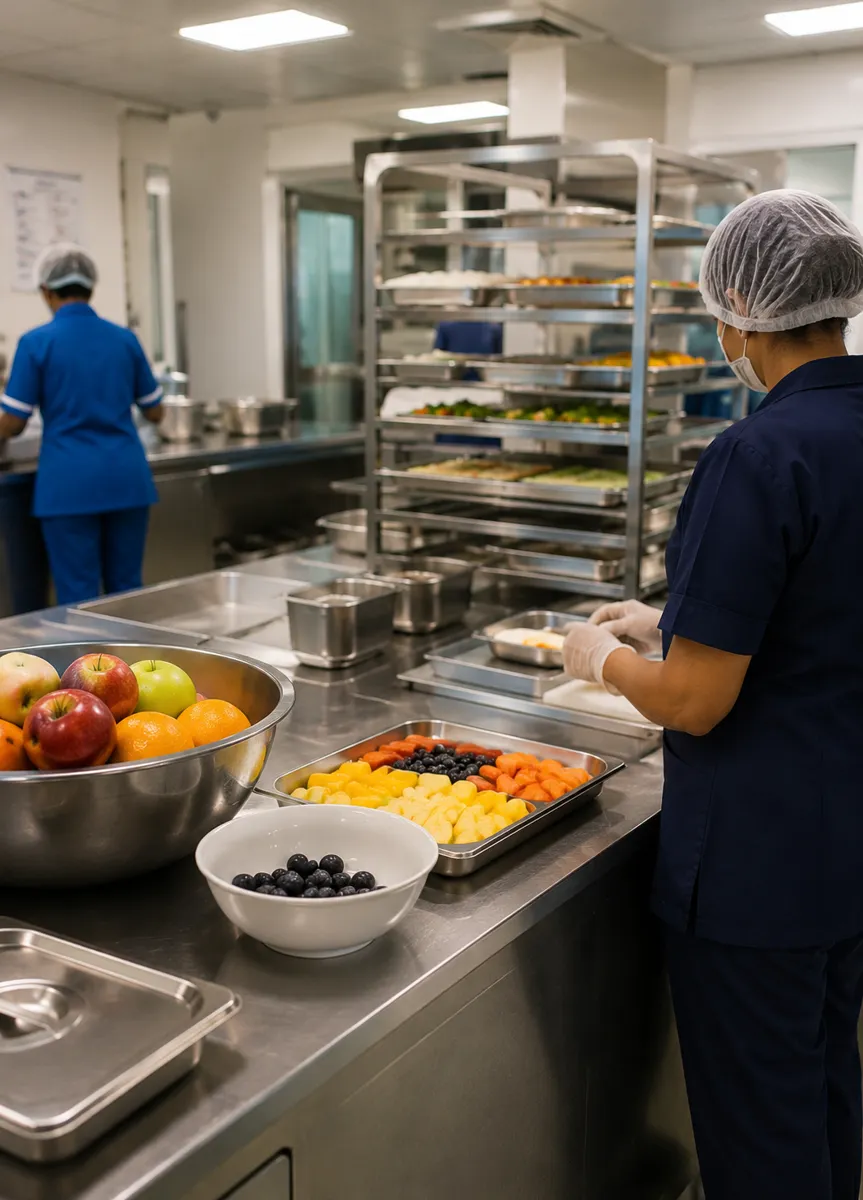
Prepared bowls can suit a planned group break, but they require suitable refrigerated storage and prompt receiving. A sealed bowl is not permission to leave cut fruit on desks through an entire shift. Follow the actual product instructions and discuss any gap between delivery and consumption with the supplier. Where the office cannot provide the required arrangements, review another format instead of assuming that changing the fruit mixture will solve the storage problem.
Reserve storage before the order arrives
After-hours refrigerator space should be verified, not assumed. A shared pantry may contain meals for several shifts or be locked outside standard office hours. Check access, space and who is responsible for moving prepared fruit into storage. Ensure the person receiving the order knows the intended service time and any instructions supplied with it.
Do not assign a shelf life to every bowl based on another product or an online menu. The actual preparation, assortment, packing and instructions matter. If the service is delayed or storage is unavailable, follow the relevant food-handling process and contact the responsible team. Planning for these exceptions before the first order is more useful than trying to improvise at a time when the usual daytime decision makers cannot be reached.
Allocate quantities to real shift participation
Use a day-by-day forecast where rosters change. An illustrative team may have 35 participants on one evening and 50 on another, even though the site employs many more people in total. Agree the quantity-change deadline and the person authorised to confirm revisions. A roster change should become a specific order change, acknowledged through the agreed process.
Keep one-off overtime and regular night work on separate lines. If a project temporarily adds a late team, state its dates rather than increasing the permanent schedule indefinitely. Identify whether contractors or visiting engineers participate. A simple allocation by team or collection point is often enough for packing; the supplier generally does not need each employee's personal roster. Clear totals protect both operational simplicity and appropriate data minimisation.
Make the collection point easy to use
Choose a location employees can access during the planned break without interrupting safety or security procedures. A central pantry may work better than individual desk distribution in a restricted workplace. Floor-wise packs may be useful where access between areas is controlled. Confirm any additional distribution work rather than assuming it is included with the delivery.
Tell employees when fruit is available, how much is allocated and whom to contact about a problem. Avoid vague messages that encourage people to take servings reserved for a later shift. If prepared portions are distributed from refrigerated storage, assign responsibility for that process. Keep serving equipment and waste disposal ready where needed. The aim is an orderly break that fits the workplace routine rather than a new service point with no owner.
Review exceptions and quality concerns
Night operations need a clear process for a late vehicle, absent receiver, changed break or mismatch with the order. Agree the contact route and record the order reference, quantity and issue. Do not imply that a backup delivery or replacement window is guaranteed unless it is part of the confirmed arrangement. A practical escalation process should distinguish a reported concern from an approved corrective action.
After the first services, compare delivered quantities with actual collection and check whether the receiving process worked. If fruit remains unused, investigate attendance, communication and the break schedule before changing the entire menu. Follow supplied instructions for any remaining prepared fruit. Keep the review focused on the service the workplace can observe, rather than unsupported claims that a certain combination improves overnight performance or solves fatigue.
Send an after-hours requirement FPS can assess
A complete brief includes shift and break times, participant counts by date, address, requested format, packing, storage capability, access restrictions and the receiving role. Add your preferred fruit selection, exclusions and target budget. Mark any details still awaiting approval and say when they can be confirmed.
Use the fruit planner's night-shift scenario to assemble the starting idea, then explain your site-specific conditions in the enquiry. Fresh Produce Shoppe will review feasibility before confirming the scope, schedule and commercial terms. A successful night-shift plan is not defined by an elaborate fruit list. It is defined by a confirmed handover, appropriate handling, a clear allocation and a service arrangement the workplace can actually support at the relevant hour.