






Work backwards from the break time
Start with the session agenda and identify when fruit will be served. A meeting beginning at nine does not necessarily need fruit at nine; the break might be later. Tell the supplier the service time and ask which receiving arrangement supports the selected format. Include the time required for security entry, unloading and movement to the room.
Coordinate with the venue or facilities team before the order is approved. Check whether the room is available for setup and whether another event uses the pantry or receiving area. If prepared fruit arrives before service, suitable storage and handling must be arranged. A schedule should show who receives the order, where it goes and who presents it at the break, rather than leaving a delivery at reception and hoping the organiser notices it.
Count participants on a consistent basis
Use confirmed attendees, expected visitors, organisers and any other group explicitly included in the order. Clarify whether speakers or facilitators receive separate allocations. If employees already have a regular desk fruit plan, decide whether the meeting portion replaces or supplements it. This prevents the same people from being counted twice without anyone intending to order extra food.
For an illustrative session with 45 confirmed participants and five organisers, a one-portion-per-person brief starts at 50 servings. Any extra allowance should be a conscious event decision, not a hidden addition by several departments. Record the deadline for the final count and the person authorised to change it. If the supplier cannot accept a late change, the organiser needs to know before invitations or attendance expectations are communicated internally.
Compare bowls, platters and whole-fruit allocations
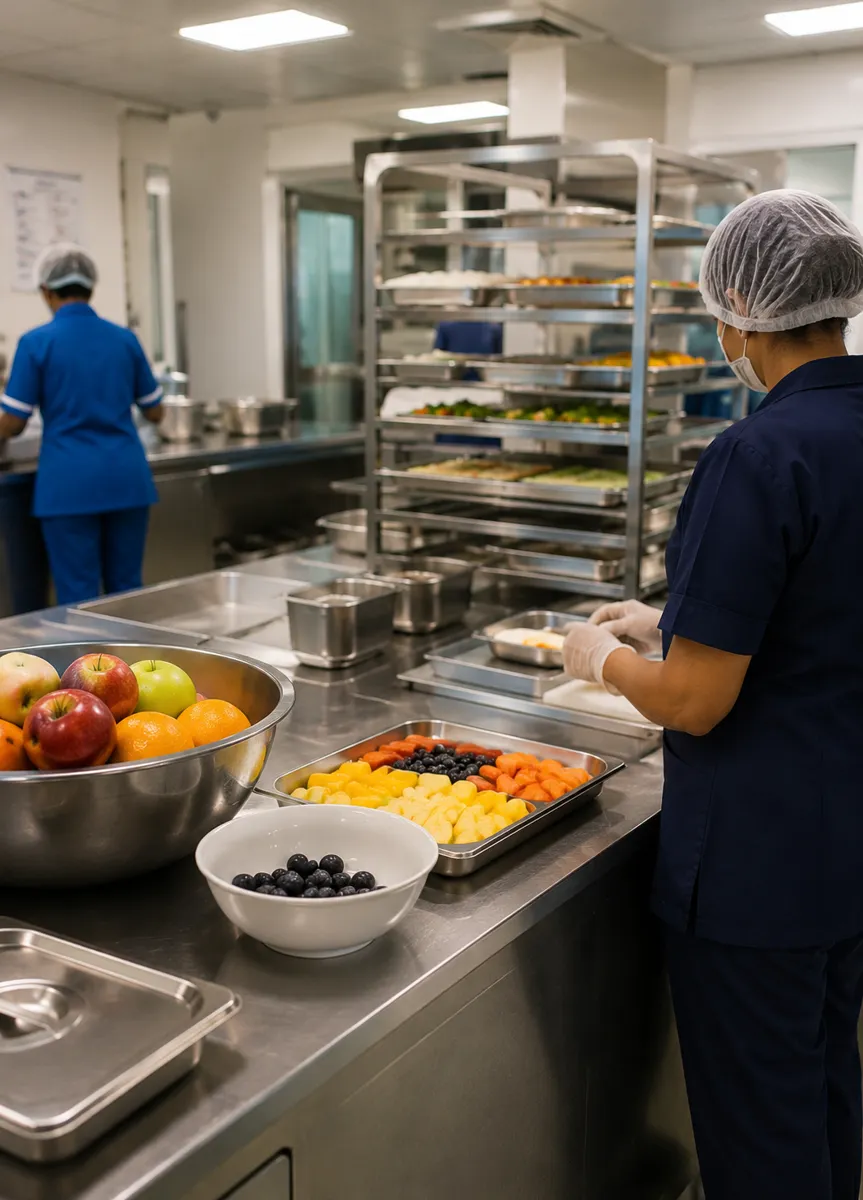
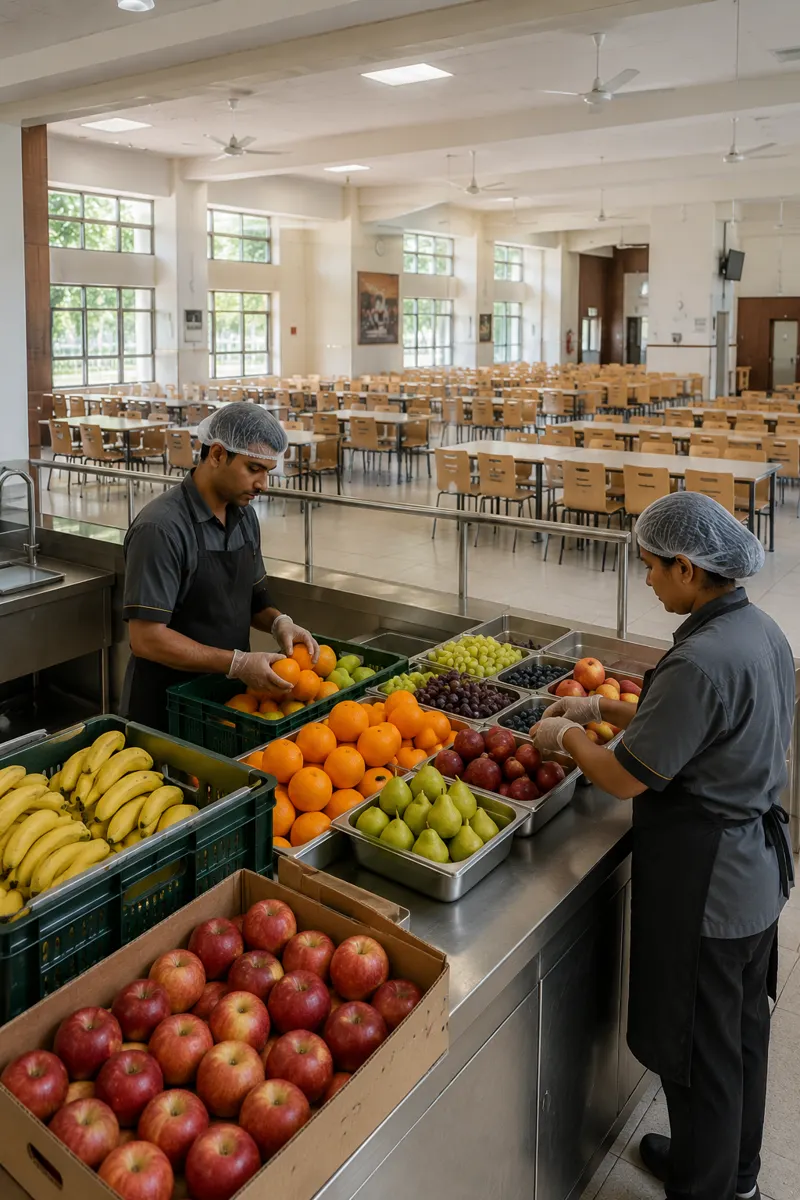
Individual bowls make serving counts explicit and can be convenient for a short break. They also require a confirmed portion basis, container and chilled-handling plan. Platters can suit a shared refreshment table, but they need suitable serving equipment and a way to judge how the approved quantity will be distributed. Whole fruit may suit a simpler meeting where attendees prefer a handheld or peelable option.
Choose based on the room and agenda rather than presentation alone. A crowded training room with no refreshment table may be awkward for large platters. A networking event with staff managing a counter may support a different arrangement. Tell FPS what the venue can provide and what you want the supplier to include. Do not assume that an attractive platter photograph includes serving staff, furniture or every accessory shown around it.
Specify the assortment and portion basis
Write down the required number of servings and the agreed prepared weight or whole-fruit allocation. If the order uses platters, confirm their total edible quantity and intended serving approach rather than relying only on platter dimensions. A reference image can help describe the arrangement, but the final specification should be clear without requiring the receiving team to interpret a photograph.
Discuss seasonal choices and any ingredient exclusions. Keep essential requirements separate from general preferences, and ask who can approve substitutions if availability changes. For a mixed bowl, clarify whether ingredients are combined or kept separate. Avoid promising that every attendee can eat the selection without checking individual requirements through the organisation's normal process. The supplier should confirm capabilities, and medically necessary dietary restrictions need appropriate individual advice rather than assumptions based on a general fruit menu.
Plan packing for more than one room
Multi-room training needs a distribution plan. Label outer packs by room, floor or service point, and confirm the count assigned to each. It should be possible for the organiser to check the allocation without opening every bowl. Identify who moves the packs after the supplier handover and how the receiving team will distinguish the event order from regular pantry deliveries.
For example, two rooms expecting 25 attendees each may need separate allocations even though the overall total is 50. If one room's break begins later, its handling and storage plan still needs to be followed. Do not let the earlier group take the later allocation simply because both arrive together. A short room-by-room service sheet can prevent confusion more effectively than a long event description with no usable quantities.
Include the small practical items
Confirm lids, utensils, napkins, serving tools and any outer packing required for the selected format. Check who provides bins and where packaging waste will go. If the venue restricts certain materials or outside food, settle that before approval. Environmental preferences should be linked to the actual packaging and local disposal arrangements rather than unsupported claims that any container is automatically sustainable.
Explain any branding or signage requirement as a separate item. A training organiser may only need a small identification label, while an event team may want approved artwork. Ask about feasibility and deadlines rather than assuming either is included. Keep labels useful for the service: product identification, room allocation and any agreed handling information usually matter more to receiving than decorative copy that obscures the practical details.
Prepare for a delayed or changed agenda
Events rarely run exactly to the first draft. Agree who can make decisions if the break moves, attendance falls or room access changes. Prepared fruit must continue to follow the supplied handling instructions even if the agenda slips. Do not invent a longer holding period because speakers run late. Ask the responsible team how to manage the actual situation.
Record any issue with the order reference, affected quantity and the difference from the approved specification. A replacement or additional delivery should not be promised to attendees unless confirmed. After service, note how many portions were used and whether the format worked in the room. Those observations help the organiser improve the next event, while broad claims about energy or productivity usually cannot be established from one refreshment break.
Send one event brief and keep the approval visible
Bring together the date, venue, room allocations, break times, attendee counts, fruit format, portion basis, packing and receiving roles. Add any exclusions, artwork, venue restrictions and target budget. Distinguish the event order from recurring office supply and state when the final count will be approved.
Fresh Produce Shoppe can review meeting and training fruit requirements alongside workplace programmes. Use the event or meeting platters option in the enquiry, and include the details that affect preparation and service. Keep the final confirmation available to both the organiser and the person receiving the order. A clear event brief makes it easier to deliver the right format to the right room at the time the workplace has planned to serve it.