




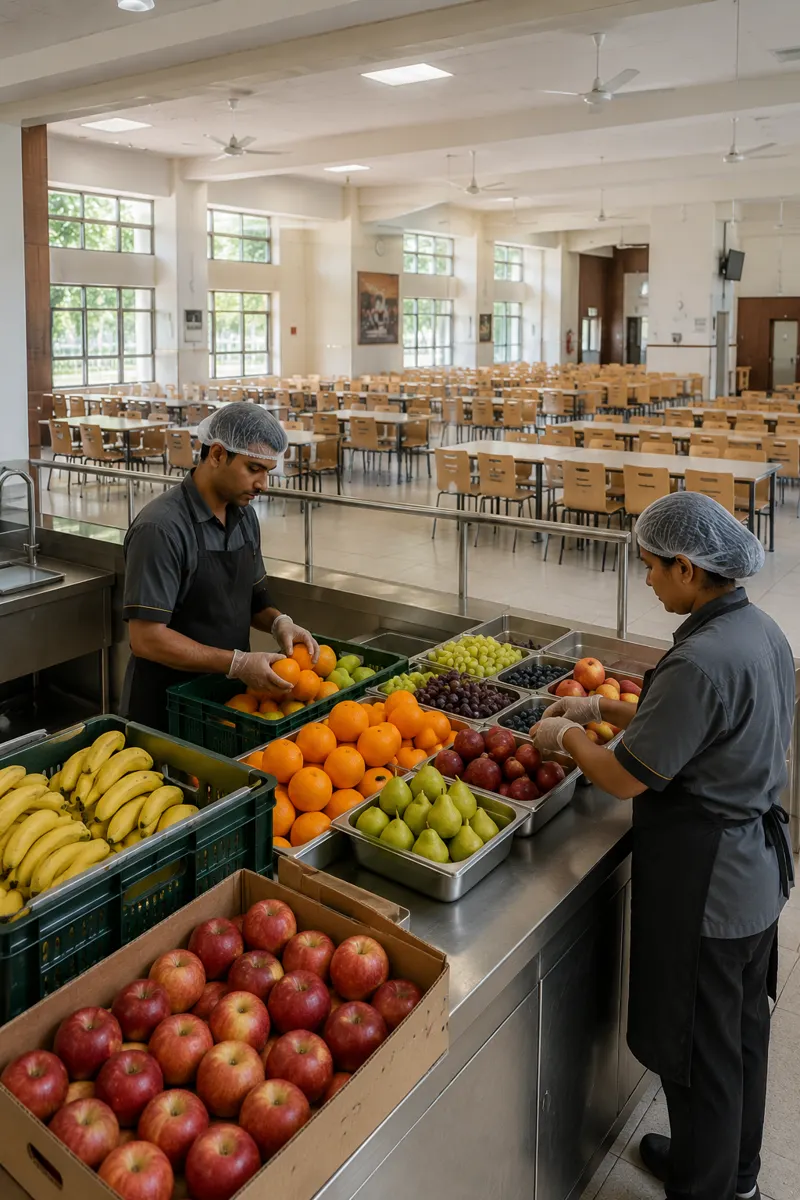



Start with the employee's actual routine
Think about what happens after delivery. Can an employee wash fruit, peel it, find a utensil and dispose of the waste conveniently? Does the team take breaks together or at different times? Whole apples, bananas, oranges and pears are examples of options to discuss for desk packs, but variety, size and ripeness still matter. A fruit that is simple to display may not be convenient to eat during a short meeting.
Prepared bowls reduce some preparation tasks for the employee, while adding preparation, packing and chilled-handling requirements elsewhere in the chain. Ask the team which inconvenience you are trying to solve. If employees already have a practical pantry routine, an individual bowl may add packaging without solving the main issue. If there is no cutting space at all, a prepared format may be worth reviewing, subject to suitable receiving and storage arrangements.
Compare the facilities each format needs
Whole-fruit service needs an appropriate storage and distribution arrangement for the selected products. The workplace should understand any washing or preparation required before eating. Do not assume that all whole fruit can be treated identically or stored together indefinitely. Explain what facilities the office actually has rather than describing the pantry you hope to install later.
Cut fruit requires a more explicit receiving and consumption plan. Confirm suitable refrigeration, the person responsible for moving the delivery and the intended service time. Follow the product instructions rather than copying an assumed shelf life from another supplier's menu. If the refrigerator is already full of employee lunches, usable space must be checked before approval. A format is only convenient when the workplace can support the handling steps that come with it.
Understand counts, weights and usable servings
A whole-fruit pack may be described by pieces, while prepared bowls are commonly discussed by net edible weight and number of servings. These units cannot be compared directly without agreeing what the office will receive. Fruit size varies, and the purchased weight of whole melon includes material that will not be served. Ask the supplier to make the unit on every order line explicit.
For illustration, a requirement for 40 employees could mean 40 individual whole-fruit allocations or 40 prepared bowls. It does not necessarily mean 40 identical fruit pieces, nor does it establish a nutritional equivalence between the two options. Record the actual format and approved serving basis. When reviewing a quotation, check both total quantity and the way it is divided, so an attractive total weight does not conceal fewer practical servings than the office needs.
Match presentation to the workplace setting
Whole-fruit packs can work well where employees choose their own break and prefer a peelable or handheld option. Shared whole-fruit bowls may also suit a pantry where participation varies. Prepared portions can simplify a scheduled meeting break or an allocation to teams without preparation equipment. The appropriate choice depends on timing, access and the workplace's service arrangements.
For a hybrid office, consider using whole fruit on regular pantry days and prepared bowls only for a weekly team meeting. Keep the requirements on separate lines with separate counts. If the same people attend both, decide whether the meeting bowl replaces or supplements their regular allocation. This avoids accidental double ordering. Confirm whether the delivery and packing arrangement can support a mixed requirement before treating it as the default programme.
Review variety, ripeness and substitutions
A whole-fruit programme needs an eating-ripeness plan as well as a fruit list. Pears needed for immediate consumption may require a different maturity discussion from fruit intended for later in the week. Prepared bowls have their own selection and preparation considerations. The supplier should review the combination against the intended service period, not simply combine every fruit a buyer mentions.
Document what can change seasonally and what needs approval. If an employee preference means one fruit is unpopular, review alternatives with the team rather than labelling the entire format unsuccessful. Keep medical restrictions separate from ordinary preferences and seek appropriate professional advice for individual dietary needs. Neither a whole-fruit pack nor a prepared bowl should be advertised as automatically suitable for every employee because it contains fresh produce.
Compare the complete cost of service
Whole fruit may involve less supplier preparation, but the office could still have internal washing, preparation or distribution work. Prepared portions include additional activities such as cutting and packing, subject to the confirmed scope. Compare delivery, utensils, outer packing and receiving effort where relevant. A price per kilogram alone does not capture these differences.
Ask for quotations using the same attendance forecast and service dates. Review the price per agreed practical serving and identify optional elements separately. Consider whether a particular packaging choice solves a real distribution problem. Avoid assigning invented savings to either format before collecting actual records. If the office is evaluating cost, measure what was ordered, accepted and used, then compare the approved alternatives against those figures rather than against assumptions about employee behaviour.
Use a simple comparison trial
A trial can help a workplace compare formats without committing to a large recurring plan. Select an agreed group, date and observation method. Confirm the trial price and availability; a sample is not automatically free. Tell employees what is being tested and ask for practical feedback on convenience, collection and preference rather than broad claims about wellness or productivity.
For instance, one floor might review whole-fruit allocations during its usual break and try prepared bowls on a separately agreed day. Record attendance and serving counts for both, because different participation can distort the comparison. Check receiving effort and whether the storage plan worked. Bring the observations into one review with the budget owner and FPS, then confirm the chosen format, quantities and any changes to the next delivery.
Write the final format decision clearly
A useful decision record explains who the programme serves, which format is approved, how portions are counted and who handles receiving. Include fruit-selection rules, any exclusions, packing, service days and the change process. If two formats are used, distinguish their dates and allocations so the receiving team can check each delivery accurately.
Fresh Produce Shoppe can review whole-fruit desk packs and individual cut-fruit requirements as part of a workplace brief. Use the desk subscriptions page to explain your facilities and preferences, or explore combinations in the fruit planner. The best decision is the one supported by the actual office routine and a clear agreed proposal, with handling instructions followed throughout the service rather than added as an afterthought.